
KINBoat Anne Frank Amstel Tour
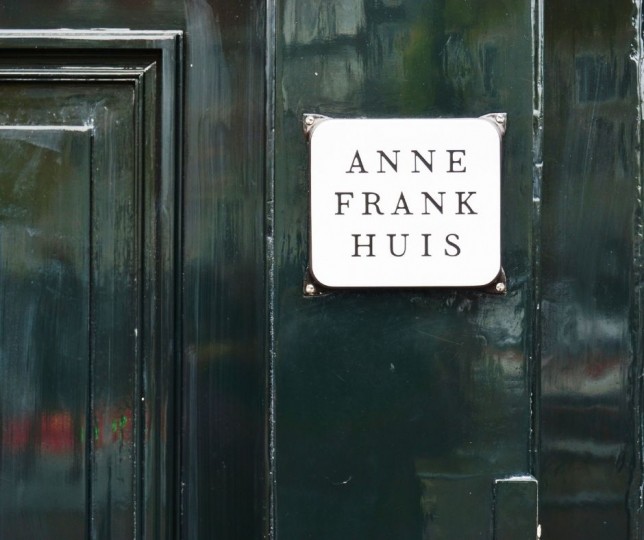
Anne Frank House
The Anne Frank House is where Anne Frank wrote her famous diary while hiding from the Nazis during World War II. The secret annex where she lived has since become a museum, attracting visitors from around the world who seek to learn about her life and the history of the Holocaust.

De Wester
The Westerkerk was completed in 1631 and is known for its impressive tower, which stands at 85 meters tall and offers a panoramic view of the city.

The Canal Ring
The VOC (Dutch East India Company) was a trading company that played a major role in Amsterdam’s Golden Age, and the canal ring is a unique system of concentric canals from the 17th century that was built during Amsterdam’s largest expansion. These two elements are closely connected because the wealth from VOC trade directly contributed to the construction and development of the canal ring, where rich merchants built their impressive houses.

High and dry
The VOC primarily traded in spices and other valuable goods from Asia, which were stored in the warehouses of merchant houses along Amsterdam’s canals. These warehouses were specially designed with large attics and hoisting beams on their facades to store the precious trade goods ‘high and dry’.

The Houseboat Museum
Houseboats have been a significant part of the city’s culture since the 16th century, originally serving as a solution to the housing shortage due to the rapid population growth and the city’s unique geography.

Facade stones
These facade stones served as orientation points for the seventeenth-century residents of the Dutch city. The small artistic works showed where the baker sold his breads and where you could go for shoe repairs.

Rembrandt van Rijn: The Night Watch,, 1642, oil on canvas, 12 by 15 feet.
Night Watch
Without a doubt, Night Watch,by Dutch Golden Age painter Rembrandt Harmenszoon van Rijn (1606–1669), is the heart of the Rijksmuseum. Not only is it the museum’s largest and most important work, but the entire collection is literally built around it, with the Night Watch Gallery at the core of the museum opening into the Gallery of Honor. This enormous, true-to-life-size painting is famed for its dramatic play of light and shadow as well for being an innovative portrayal of a group in motion rather than a static military scene.

Spiegelkwartier

De Amstelkerk
The Amstelveld square features Amsterdam’s only surviving wooden emergency church. This rare wooden structure hosts concerts and art exhibitions. With its beautifully proportioned windows, the intimate building resembles an elegant jewelry box.

De Duif
De Duif (The Dove) is a historic catholic church building notable for its impressive facade and classical architecture.
The church has remarkable acoustics, making it a popular venue for classical music performances and choir concerts. Its interior features beautiful stained glass windows and a historic Smits organ from 1862, which is still in use today.

De Amstel
Traditionally an important shipping route between the Zuiderzee and the hinterland. And the namesake of our beautiful city. Around 1265, the Dam in the Amstel was built, which quickly turned the fishing village into a real city, and this is also the year when Amsterdam obtained the rights to levy taxes, making it a city. In the beginning, Amsterdam was also called “Amstelredamum” (= dam in the Amstel), which gradually changed to Amsterdam.

De Magere Brug
De Magere Brug or “The Skinny Bridge” is internationally famous for the scenes from the James Bond film “Diamonds are Forever.” Note: If there are loving couples on board – give each other a kiss exactly under the bridge, and you’ll remain in love for the rest of your life!

H’ART Museum
In the early days of Amsterdam, there were a lot of women in the city who caused trouble – theft, prostitution, etc. – mostly widows who had lost their husbands at sea – only about 40% of sailors returned alive. The wealthy merchants gave money to the Diaconie to build a large “old women’s house” on the other side of the Amstel – then still cheap land. In 1681, the Amstelhof Gasthuis was built, which served as a nursing home until 2007, after which it was converted into the Hermitage Museum, which is now, due to the war in Ukraine, renamed the H’Art Museum.

City Hall & National Ballet Theatre
The current Royal Palace on Dam Square was the original Amsterdam City Hall, from the early 19th century, the city hall moved to the Oudezijds Voorburgwal, eventually, this building became too small and in the 1980s, architects Holzbauer, Holt & Cees Dam designed a new city hall at the location of Waterlooplein/Oude Vlooienburg. This building has a dual function as the Amsterdam City Hall and a theater for the National Opera & Ballet.

De Herengracht
We are now sailing on the Herengracht. Part of the prestigious expansion plan of the city from the early Seventeenth Century. This part is the second part running from the Leidsegracht to the Amstel, and here you mainly see very large buildings. The city council only issued large plots of land for this part – they wanted to concentrate the rich patricians here. This was wealth because taxes were paid based on the width of the house and the number of windows. Even a double staircase was taxed extra.

De Reguliersgracht
One of the most beautiful canals – famous for its seven identical arched bridges. In 1901, the city council wanted to fill in this canal for the new Electric Tram, but fortunately, it was rejected due to many protests. In the evening, it is very beautiful because the arches are illuminated, and from Thorbeckeplein, this is a beautiful sight!

Proeverij Van Wees
At this former distillery, you can enjoy traditional jenever (Dutch gin—older and better!), beer, and their famous fondue or bitterballen. The Nine Streets area offers a cozy atmosphere with its lively mix of tourists and locals.

Huis Bartolotti
The Bartolotti House was built around 1617 for Willem van den Heuvel tot Beichlingen, one of the wealthiest Amsterdammers of that time, who had inherited a substantial fortune from a childless uncle by marriage, Giovanni Battista Bartolotti, a merchant from Bologna.

Thank you for touring with us
Enjoyed the tour? I would really appreciate it if you leave a positive *****review at google or Tripadvisor.